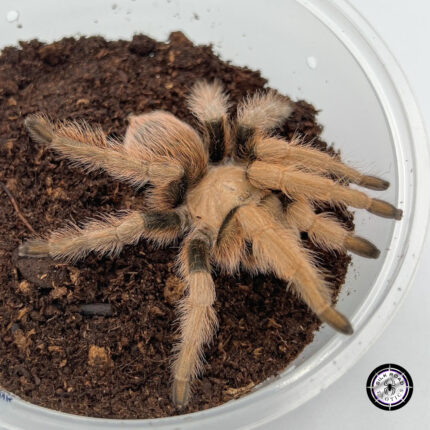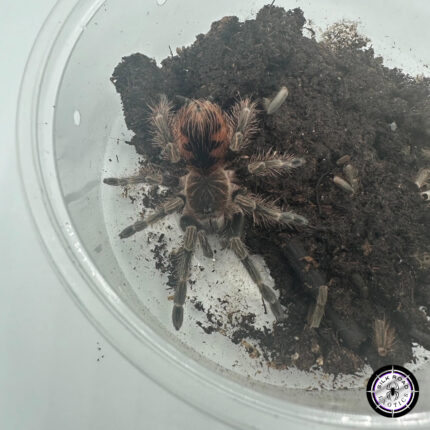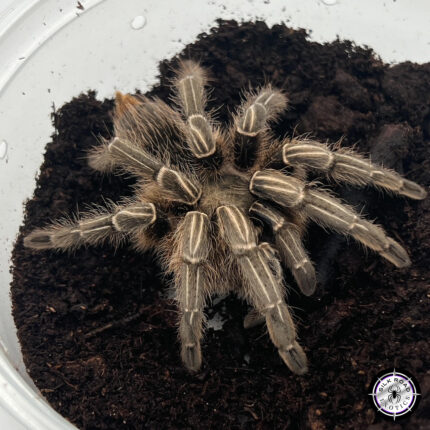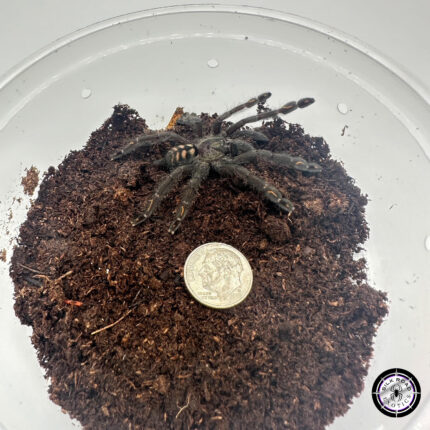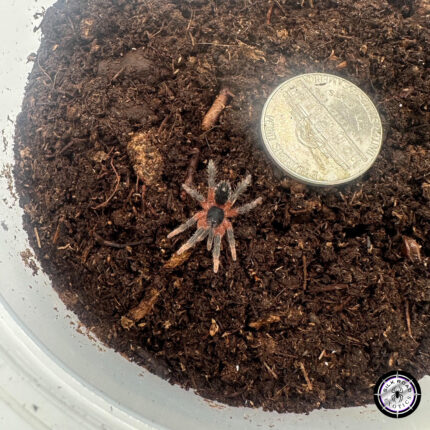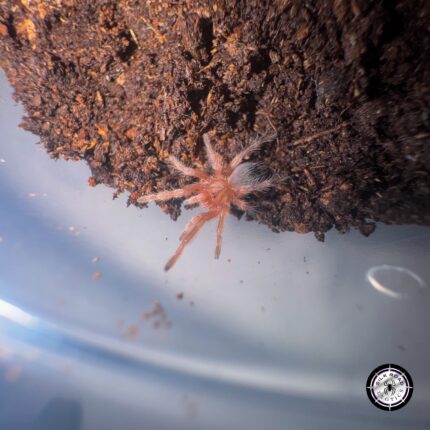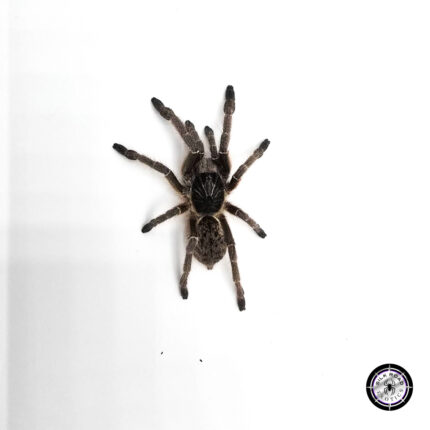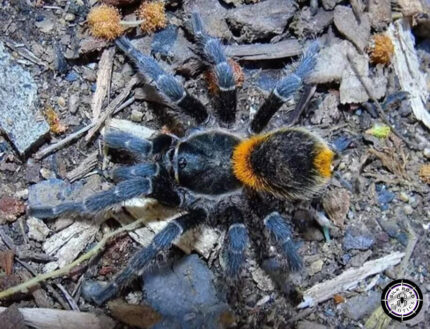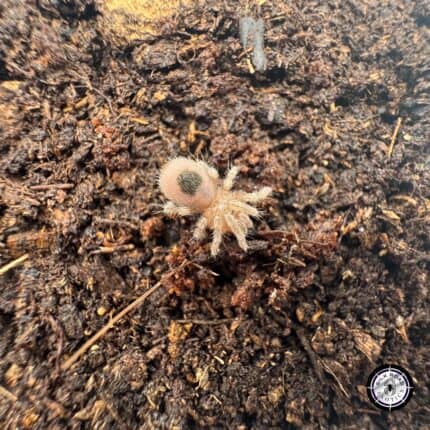
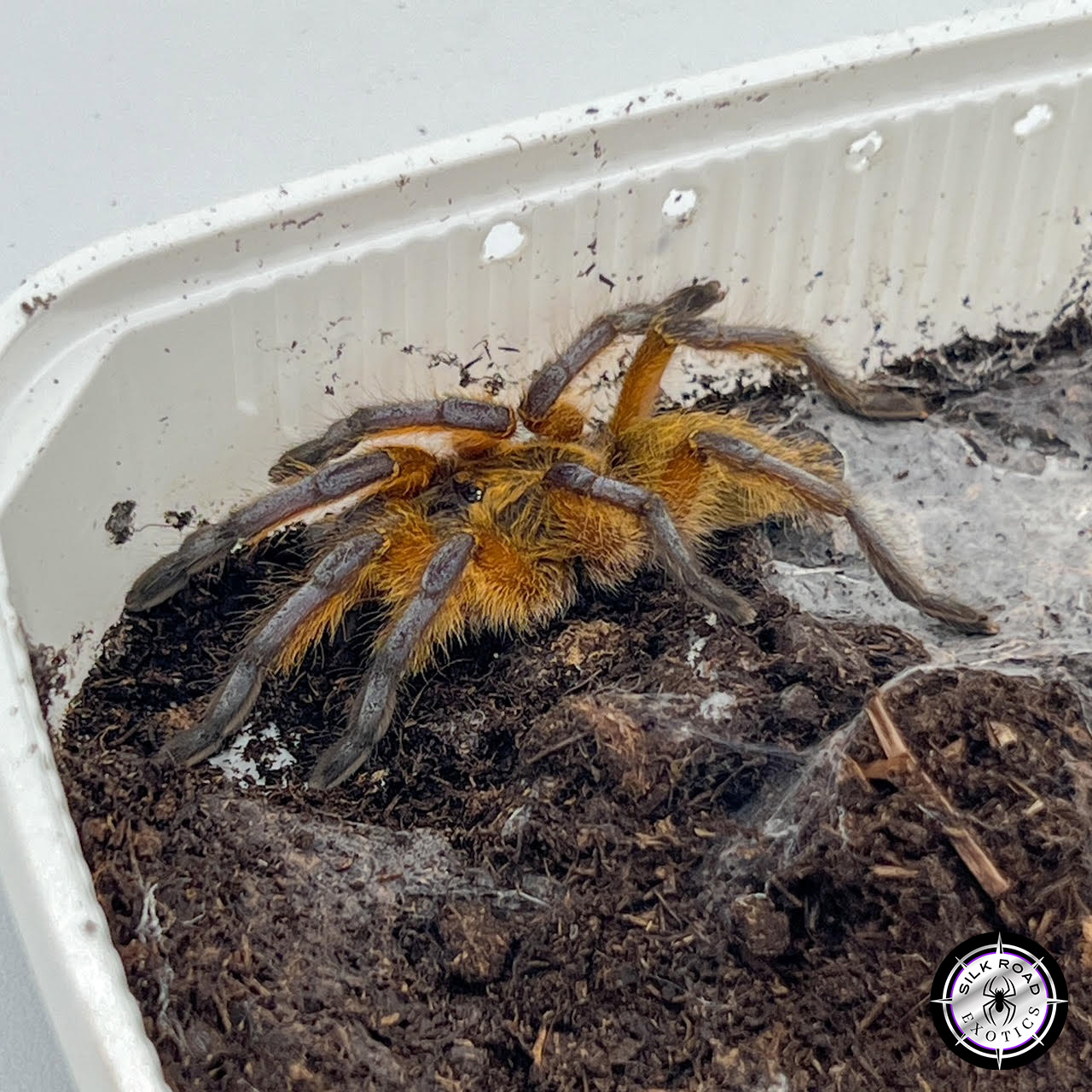
Golden Blue Leg Baboon (Harpactira pulchripes) – 2 to 3 inch
$150.00
Out of stock
Live Arrival Guaranteed
Ships Overnight from Florida
The Golden Blue Leg Baboon is the undisputed “Supermodel of Africa” and one of the most breathtaking species in the world. Harpactira pulchripes is famous for its shimmering metallic gold carapace and high-contrast, neon-blue legs—a color combination that seems almost artificial in its brilliance. For the serious collector, this is a “Grail” species that provides an unmatched visual reward every time you approach the enclosure.
Despite being an Old World species, the Golden Blue Leg is surprisingly laid-back compared to its cousins. They are prolific webbers, often creating intricate silken tunnels that allow them to display their vibrant colors against a white silk backdrop. Their fast growth rate and aggressive feeding response make them incredibly rewarding for keepers who have mastered New World species and are ready for their first African centerpiece.
At the 0.75-1 inch juvenile stage, these spiders are already showing incredible potential. They are active, hardy, and quickly begin engineering the heavy silk fortresses they are known for. At Silk Road Exotics, we consider this the perfect “bridge” species for the intermediate keeper looking to enter the world of Old World tarantulas with a specimen that is as robust as it is beautiful.
| Species | Harpactira pulchripes |
| Common Name | Golden Blue Leg Baboon |
| Origin | South Africa (Eastern Cape) |
| Adult Size | 4.5-5 inches (11-13 cm) |
| Lifespan | Females: 12-15 years | Males: 2-3 years |
| Growth Rate | Fast |
| Temperament | Skittish / Remarkably calm for a Baboon |
| Care Level | Advanced |
| Type | Terrestrial / Heavy Webber |
| Handling | STRICTLY NO (Old World Venom) |
Enclosure Setup
Size & Housing
For a 0.75-1 inch juvenile, a small acrylic sling enclosure or a 16oz deli cup is perfect. As they mature, upgrade to a 5-10 gallon horizontal enclosure. Because they are lightning-fast, always use a secure, locking lid. Front-opening enclosures are highly recommended to allow for maintenance without triggering a “bolt” response from above.
Substrate & Decor
Provide 4-5 inches of bone-dry substrate. Use a mix of topsoil and sand to allow for burrow stability. Crucially, provide plenty of anchor points like cork bark, dried leaves, and fake plants. This species is an architect; they will use these items to build massive, funnel-like web structures that serve as their primary security.
Ventilation
Excellent cross-ventilation is mandatory. Stagnant air is the enemy of Baboon spiders. Ensure your enclosure has multiple airflow points to keep the environment fresh and dry.
Temperature and Humidity
Maintain temperatures between 75-82°F (24-28°C) to mimic the South African sun. Humidity should be kept low, around 50%. Do not mist. Instead, provide a shallow water dish and keep it full. If the spider needs moisture, it will sit over the dish. Keeping the air dry is the best way to keep this species healthy.
Feeding
Golden Blue Legs are voracious eaters with a lightning-fast takedown. Feed juveniles 1-2 appropriately sized insects weekly (pinhead crickets or roach nymphs). Adults should be fed 2-3 large crickets or a medium-sized Dubia roach every 7-10 days. Always remove uneaten prey to avoid stressing the spider during its molt cycle.
“While they are less defensive than other Baboon spiders, H. pulchripes is an Old World species. They possess medically significant venom and are capable of lightning-fast movement. Handling is strictly prohibited. This is a ‘look-but-don’t-touch’ centerpiece animal that commands respect.”