
Zombie Crab – to Care: Everything You Need to Know

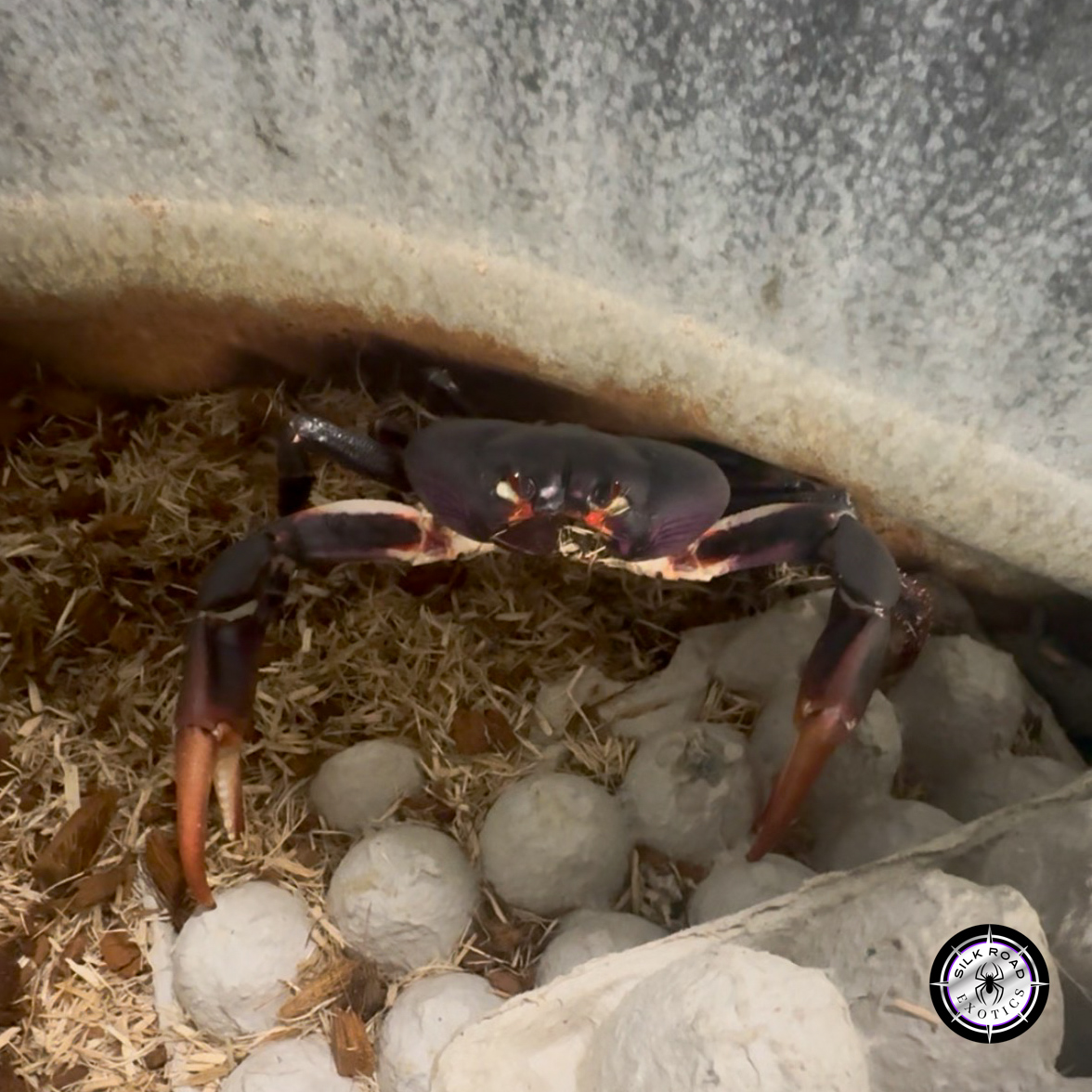
The Zombie Crab, scientifically known as Gecarcinus ruricola, is one of the most visually striking and biologically fascinating land crabs in the world. Also commonly known as the Black Land Crab or Caribbean Land Crab, this species earns its “Zombie” moniker from its unique migratory habits and its vivid, high-contrast coloration. These crabs are famous for their massive annual migrations, making them a true marvel of the natural world.
Native to the Caribbean and parts of Florida, Zombie Crabs are primarily terrestrial. They are engineered for life on land, having evolved specialized gill chambers that allow them to breathe air as long as they remain in high-humidity environments. In the wild, they are found in the shadows of forest floors and rocky crevices, where they play a vital role as “ecosystem engineers” by processing leaf litter and aerating the soil through their extensive burrowing.
For the dedicated invertebrate keeper, the Zombie Crab offers a rewarding challenge. They are known for their distinct personalities—ranging from incredibly shy to bold and defensive—and their impressive size. Unlike smaller ornamental crabs, a mature Zombie Crab becomes a centerpiece inhabitant that displays complex behaviors, from intricate “housekeeping” of their burrows to strategic foraging sessions.
| Species | Gecarcinus ruricola |
| Common Name | Zombie Crab, Black Land Crab, Caribbean Land Crab |
| Origin | Caribbean Islands, Florida Keys |
| Adult Size | 4-5 inches (Carapace width) |
| Lifespan | 7-10+ years |
| Growth Rate | Slow |
| Temperament | Territorial, solitary |
| Care Level | Advanced |
| Type | Terrestrial |
| Handling | Not Recommended |
Enclosure Setup
Size
Due to their size and territorial nature, adult Zombie Crabs should be housed individually. A single adult requires a minimum of a 20-gallon “Long” tank, though a 40-gallon breeder is ideal to allow for a proper heat gradient and deep substrate. Floor space is significantly more important than height.
Substrate
Substrate is the most critical component of G. ruricola care. You must provide a “moltable” substrate—a mix of coconut fiber, additive-free topsoil, and play sand. The substrate should be at least 6-8 inches deep and kept at a “sandcastle” consistency to prevent burrow collapse. This allows the crab to create a safe, humid microclimate for molting.
Hide and Water Features
Provide two water dishes: one for dechlorinated fresh water and one for marine-grade salt water. Both dishes must be shallow enough for the crab to stand in without being fully submerged, and they MUST have easy-exit ramps, as Zombie Crabs are poor swimmers and can drown. Multiple hides, such as cork bark flats, should be provided on both the warm and cool ends.
Temperature and Humidity
Maintain a thermal gradient with a warm side of 82-85°F (28-29°C) and a cool side around 75°F (24°C). Avoid under-tank heaters on the bottom; instead, place heat mats on the side of the tank above the substrate level.
Humidity must be kept high, between 75-85%. If the air becomes too dry, the crab’s modified gills will dry out, leading to respiratory distress. Daily misting and deep, moist substrate are essential.
Feeding
Zombie Crabs are opportunistic omnivores. Offer a balanced diet of high-quality crustacean pellets, leaf litter, and fresh foods like kale, broccoli, dried shrimp, or dubia roaches. Always provide a constant source of calcium, such as cuttlebone, to support exoskeleton health.
Molting
Molting is the most dangerous time in a Zombie Crab’s life. When they prepare to molt, they will retreat into their deep burrows and may not emerge for several weeks. Never dig up a buried crab. Leave the discarded exoskeleton in the tank, as the crab will eat it to recycle minerals.
Ready to Add One to Your Collection?
We have the Zombie Crab (G. ruricola) available now with live arrival guaranteed.